A Lifelong Journey
My name is Joseph Angelo Caruso, and I am a jeweler and treasure hunter. I spend my days searching for gold, gems, and my favorite, fossils. Traveling and visiting remote locations in search of materials for my jewelry is a large part of my work, and the main location I collect is our very own paleontological site in Kern County, California, near the city of Bakersfield.
My story begins long before I was born with my parents Ray and Marcia, who have been collecting fossils and minerals, as well as making artwork, for over 50 years together in Laguna Beach. When I was eventually born, it wasn't long until my folks started taking me with them into the wild. Our first trip to Alaska to look for fossil mammoth ivory eroding out of the permafrost was when I was almost 3 years old. Kayaking and hiking on the weekend was the norm, and on one of our fateful hikes at the age of 4 years old, my mother found something that changed the trajectory of our lives forever; a 12-million-year-old great white shark tooth. The find was huge, exciting, and unbelievably just a 15-minute drive from our home.
Thus began a weekly tradition of heading out on Sunday to hike the hills of Orange County looking for fossil shark teeth. With all the construction of suburbs in the 90s, we had endless opportunities to collect freshly exposed fossils. Each and every housing development in Orange County cut through 6 to 15 million-year-old sandstone, which was once the bottom of a huge bay covering much of Southern California. Mainly after rains, we would walk around and find fossils from marine mammals and sharks. We began buying books on fossils and learning more constantly as we went. Construction continued for years, and we saw fossil exposures come and go, buried under concrete. With every loss of a favorite site we talked of somehow buying our own - an impossible dream at the time.
In the meantime though, using our newfound knowledge, we began to expand our explorations into other states. For three years at the ages of 7, 8, and 9 years old, my folks took me out of school for 2 months a year and we traveled the country hunting fossils. Florida, Maryland, North and South Carolina, Texas, Ohio, and more. As a family, our fossil hunting education grew by leaps and bounds and our passion only increased.
When I went off to college it was a given that I would be studying Geology. For four years while in school I joined the William Lanphere Paleobotany Lab. Fossil plants were not my first choice to study, but I quickly became infatuated. Eventually, I gave a couple of talks at the Botanical Society of America and the Geological Society of America on 400-million-year-old fossil plants, my first formal work in paleontology. After 3 years, I published my first official paper as an undergraduate, Microconchid encrusters colonizing land plants: the earliest North American record from the Early Devonian of Wyoming, USA. This was especially meaningful to me as I had collected the samples myself in the Beartooth Mountains of Wyoming.
With a paper under my belt and a fresh degree I decided to take a little time off and travel, backpacking my way through 35 countries. Seeing so many cultures and meeting people from around the world opened my eyes further to the richness and wonders that surround us.
Then one day, seemingly out of nowhere, we acquired our very own 54-acre paleontological site, fulfilling a lifelong dream.
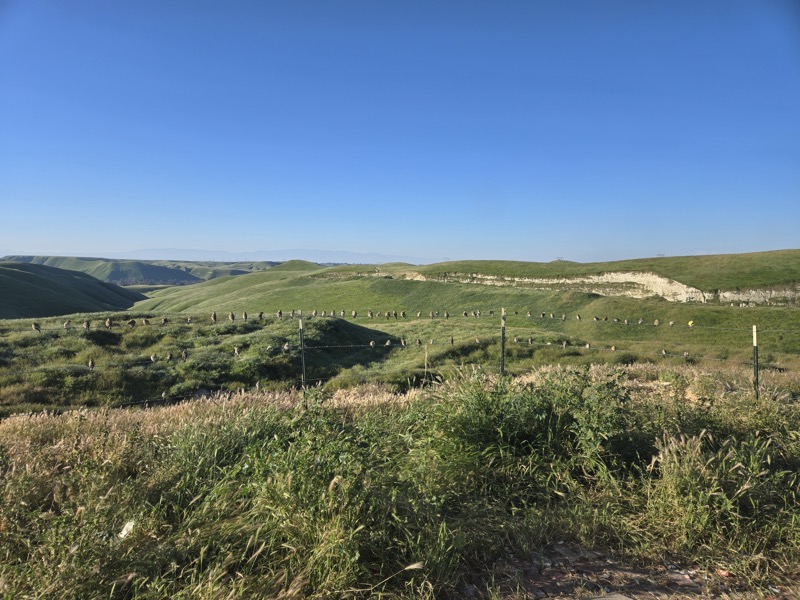
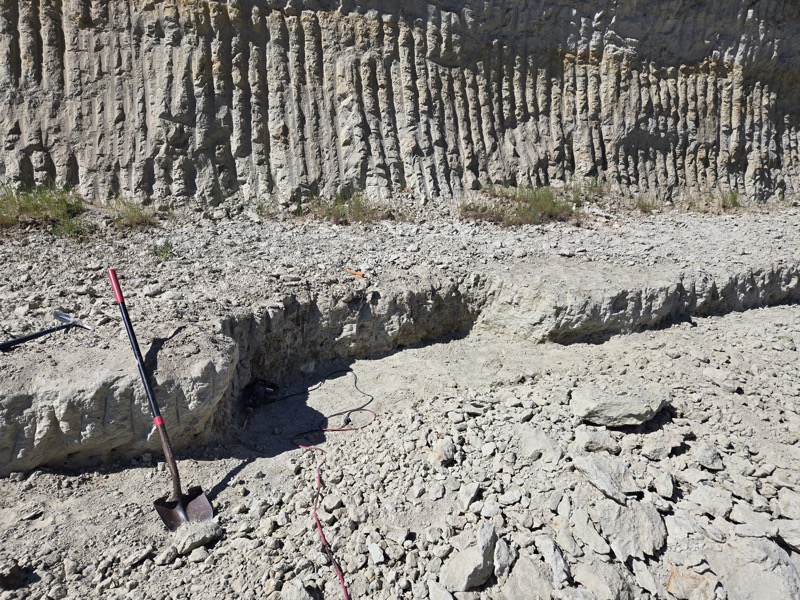
For many years we had heard about a near mythical place to find fossil sharks, marine mammals, and ancient terrestrial animals long gone from our world. Around 15 million years ago there was a vast bay, surrounded by rivers and forests, where today sits the modern day city of Bakersfield. In the 1850s, gold prospectors discovered a foot-thick layer in a portion of the Kern River valley absolutely packed with fossils. Ever since this discovery, people have been digging into portions of this ancient seabed.
A Kern County pioneer of paleontology named Bob Ernst had been steadily collecting on the site for decades when he suddenly and tragically passed away. After several years, his family decided to open up their property to visitors, to share in the bountiful fossils. We Carusos were one of those early visitors, and the moment we set foot on the hill, love was born. It wasn't too long later that we made an offer on the property, and soon after we had 54 acres of fossil-rich land.
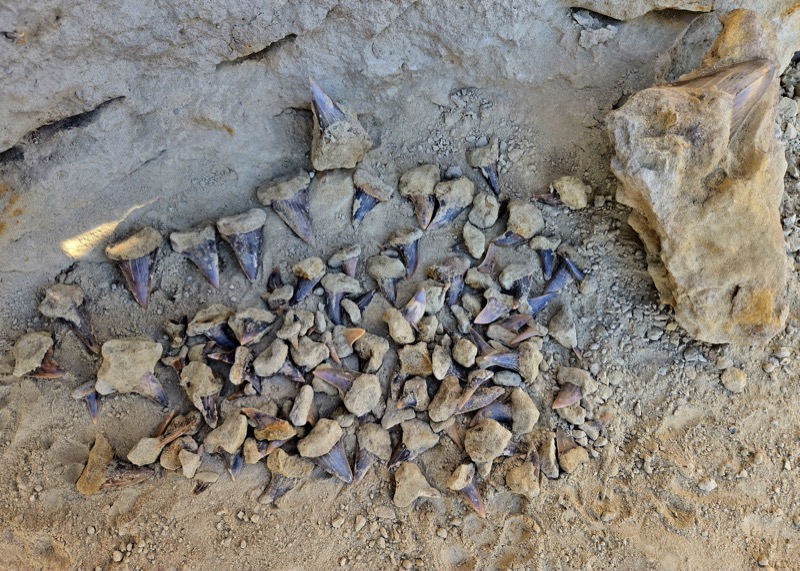
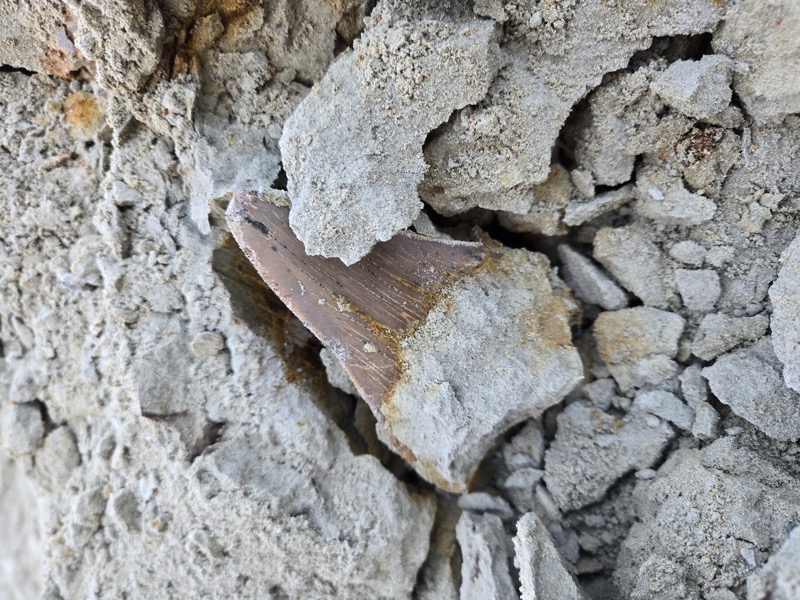
Now, we spend weeks at a time camping on site, digging fossils and collecting history. Sharks, whales, seals, dolphins, fish, and more are found daily. On site, the fossil-bearing layer runs through the hills at a 4 degree angle, like a slightly tilted slice of cake. This foot-thick layer is the bottom of that 15 million year old bay; mud that has trapped millions upon millions of fossils. The layer is hard as concrete and buried under several hundred feet of solid stone. Once exposed though, the possibilities of what can be found are nearly limitless.
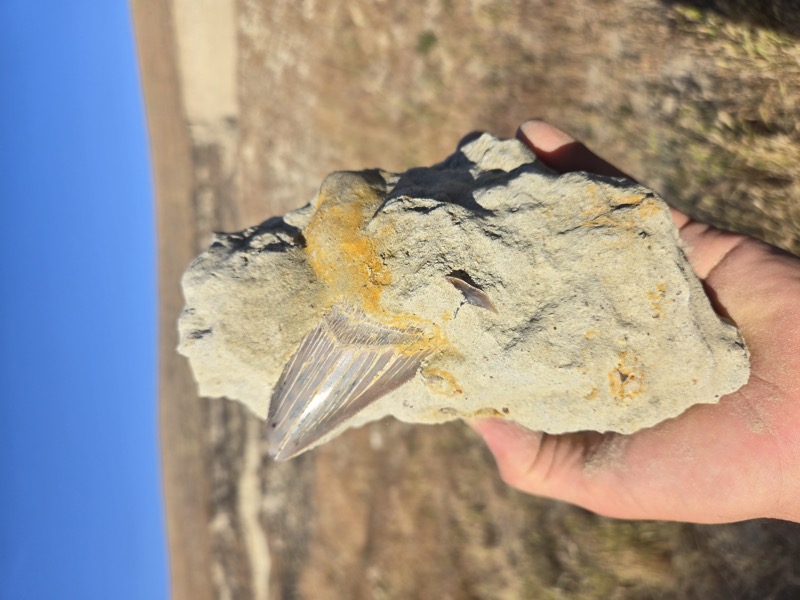
Many of our finds are unique, precious, and significant to the general knowledge of our ancient history. Many of the fossils belong to vaguely familiar animals, though they are only similar. The sharks were giants, some nearing 50 feet. The whales were miniatures, a fraction of the size of today's giants. We see turtles and stingrays, familiar ocean-going animals, while mysterious extinct creatures like desmostylians can be found, leaving us wondering much.
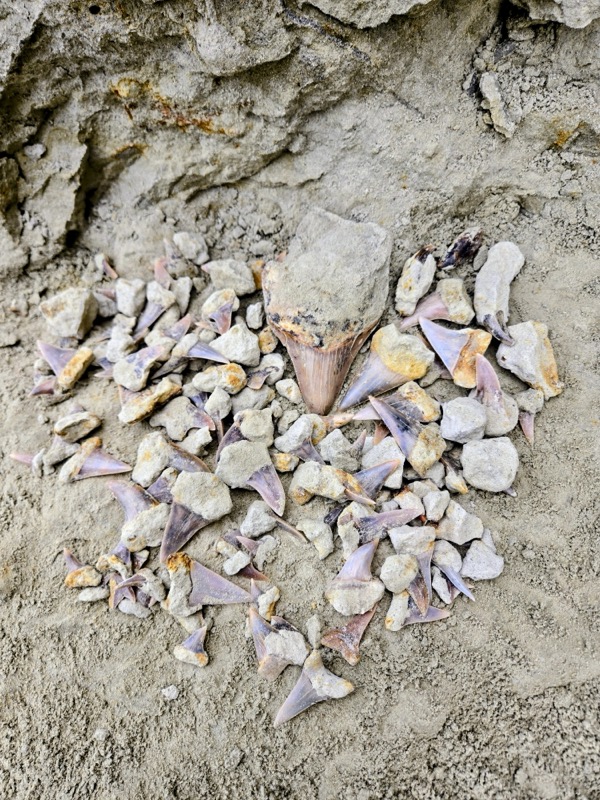
As exciting as the ancient mammals are, our main prize is and always will be the fossil shark tooth. From smaller than a grain of sand to as large as a dinner plate, fossil shark teeth are what we truly are always hunting. Every size, shape, and color can be found on our site. What makes them special, beyond age and rarity, are the incredible colors. Blue, red, green, pink, and purple can all be seen in a day of collecting. The minerals in the surrounding sand replace the original material, forming a fossil, and in doing so take on different colors. The main elements are iron, responsible for reds; copper, for blues; and manganese for black. These colors make for incredible specimens, and exquisite jewelry.
At home in Laguna Beach is our family laboratory, a dusty workshop full of paleontological and jewelry related tools. Here is where my folks and I clean, organize, and contemplate our finds. Along with the shark teeth we have acquired countless gems and minerals from around the world. Each gem, mineral, or fossil is studied, and some lucky few are chosen to become pieces of art.
"After a lifetime of searching, I am exactly where I always wanted to be. Digging up fossil shark teeth."